About Robert
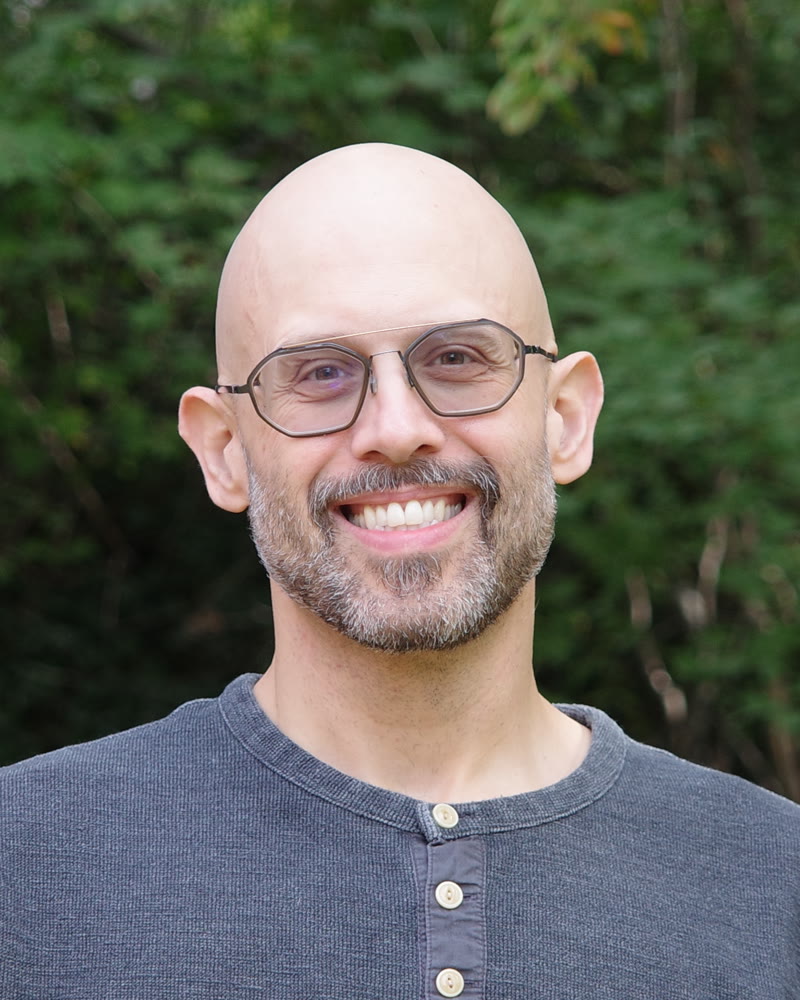
I'm Robert, the founder of Oatlab and the engineer behind Bronco. I have spent more than two decades building software for the web, for security teams, and now for private AI on the desktop.
What I do
Oatlab is a one-person software studio. I work on the models, the plumbing, and the product myself, which means the person you talk to is the person who writes the code. My focus is local and on-device AI: model integration, retrieval over your own documents, tool use, and agents.
Bronco is the main thing I build. It is AI for private knowledge work: it reads the PDFs, documents, and spreadsheets in your Projects, searches them, and answers from what is actually there, with the model and your material staying on your Mac. I built it because I wanted an AI tool I could rely on for a long project, and because I wanted one for my family.
I also take on direct AI consulting, project-based or ongoing, with clients in the Washington, DC area and remotely.
How I got here
I started in 2003 at QuaTeams, designing and developing public-facing web sites in HTML, CSS, and Photoshop and deploying them to Red Hat servers. In 2005 I maintained National Geographic Magazine's web site as a contractor, adding features and preparing photos. After that I spent three years at The Motley Fool writing HTML, CSS, and JavaScript for its premium products and an InDesign/XSLT/PDF publishing workflow. At Vulnerability Research Labs I worked on an enterprise Ext JS desktop application, a GIS application in HTML5, and a system handling millions of requests an hour over RabbitMQ, AMQP, and Celery.
Endgame is where I found AI. I worked in Agile teams staffed with data scientists, on software that used AI mostly to categorize data, and on natural-language-processing chat-bots. In 2015 I put serious effort into open-ended text assistants, which made working with LLMs years later feel like a homecoming. I also built 3D visualizations of process graphs, starting with WebGL and then a CSS-based 3D renderer, which is how I learned the basics of linear algebra and quaternions. Bloom filters and, later at Elastic, HyperLogLog Plus for cardinality estimation, were part of the anomaly-detection work.
Elastic acquired Endgame, and I stayed for nearly five years as Tech Lead for Elastic Security. There I learned information retrieval and how to expose a large surface of functionality to users without making it fragile at scale. At Prequel.dev I was a Principal Engineer on a small team, working with Three.js and Monaco and coding with Cursor's agent mode as my primary tool.
In 2026 I took a career break to decide what to build next. I explored cloud-hosted agents and generative-art sites, then chose local AI: it puts a skilled person in front of powerful desktop software with private, secure assistance, on-site and cost controlled. That decision became Oatlab and Bronco.
Experience
A condensed version of my LinkedIn history.
| Years | Role | Organization |
|---|---|---|
| 2026–present | Solo AI Developer | Oatlab |
| 2026 | Career break | Professional development May–Oct 2026 |
| 2024–2026 | Principal Engineer | Prequel.dev |
| 2019–2024 | Tech Lead, Elastic Security | Elastic Arlington, VA |
| 2018–2019 | UI Architect | Endgame Arlington, VA |
| 2017–2018 | Principal Software Engineer | Endgame Arlington, VA |
| 2014–2017 | Senior Software Engineer | Endgame Virginia |
| 2014 | Lead Front End Engineer | LivingSocial |
| 2013–2014 | Software Engineer | Lab49 Washington, DC |
| 2009–2013 | Software Engineer | Vulnerability Research Labs Columbia, MD |
| 2006–2009 | Front End Web Developer | The Motley Fool Alexandria, VA |
| 2005 | Contractor | National Geographic Society |
| 2003–2004 | Junior Software Engineer | QuaTeams Columbia, MD |
Elsewhere
| u/oatkiller | |
| X | @oatkiller |
| Robert A. |
Tell me what you're working on.
A sentence or two about the problem is the perfect first message. I'll tell you straight whether I'm the right fit.